Why visit Viminacium
Why visit Viminacium
One of the Balkans' great Roman cities
At its height Viminacium held an estimated 40,000 people — making it one of the largest cities in the Roman Balkans and the capital of the province of Moesia Superior. It began as a legionary fortress guarding the Danube frontier and grew into a full civilian city, with its own mint and a network of roads along the Via Militaris. Walking its foundations, you're standing in a city that once rivalled the great provincial capitals of the empire.
Frescoes, baths and a legion's headquarters
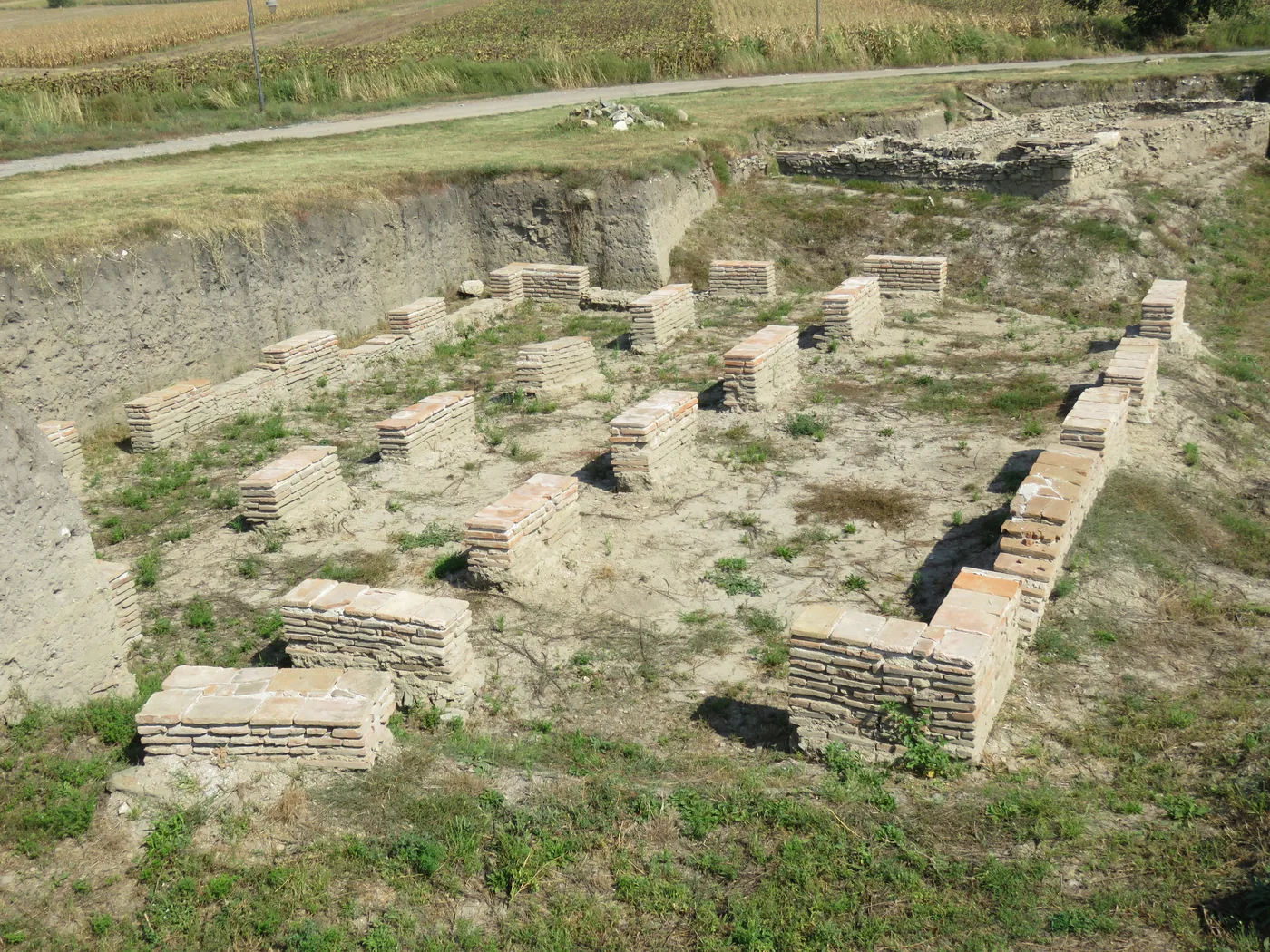
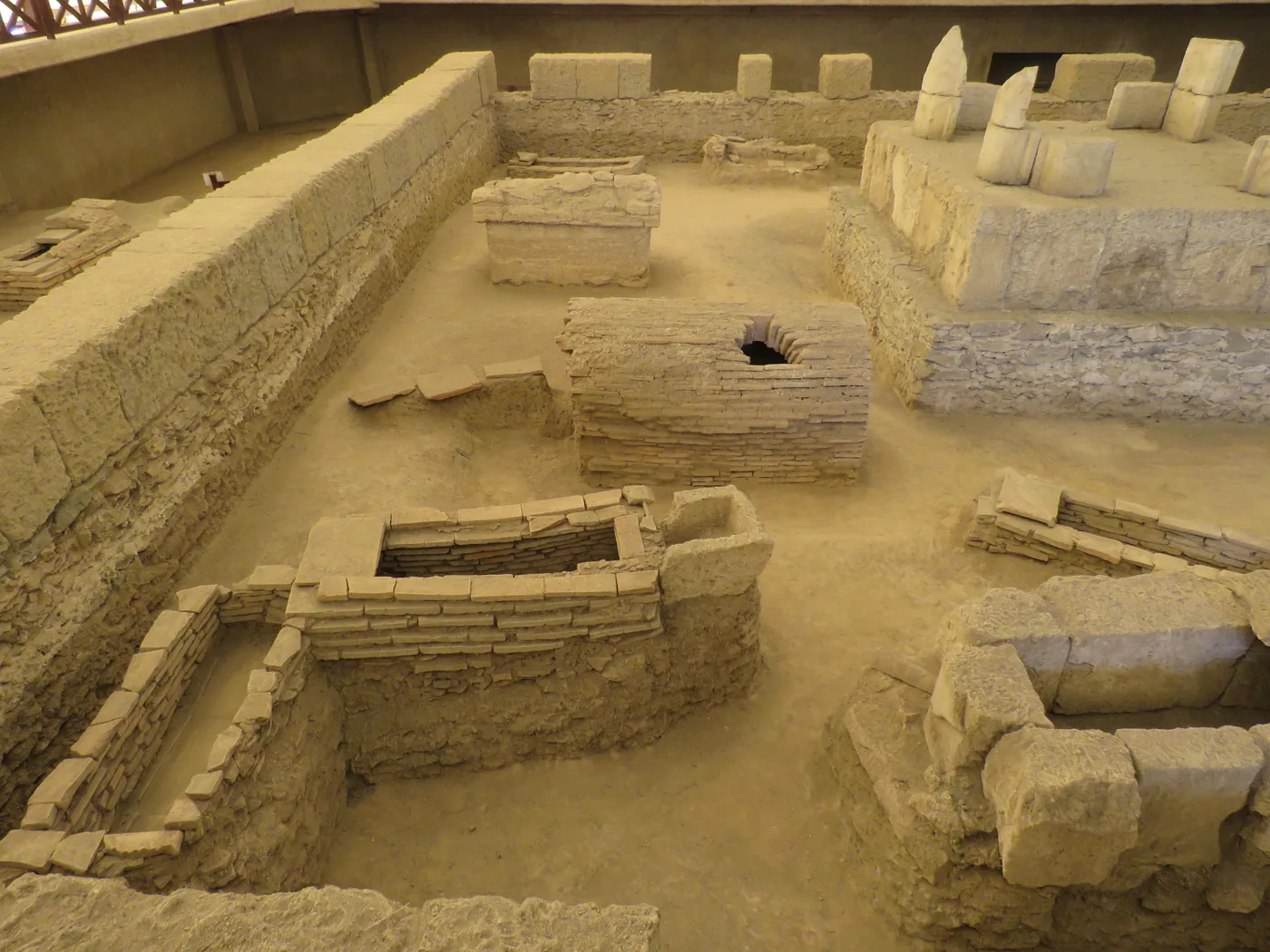
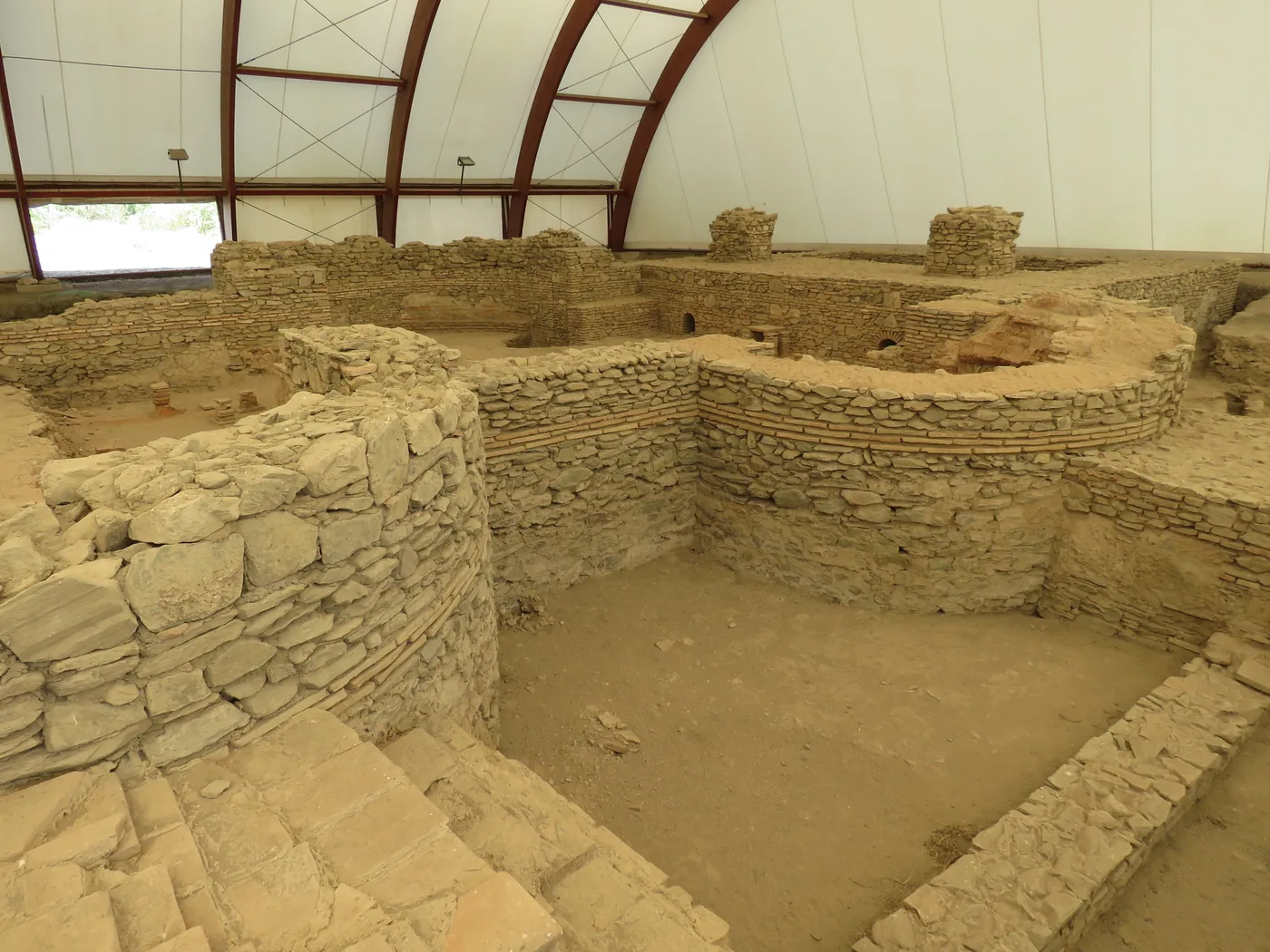
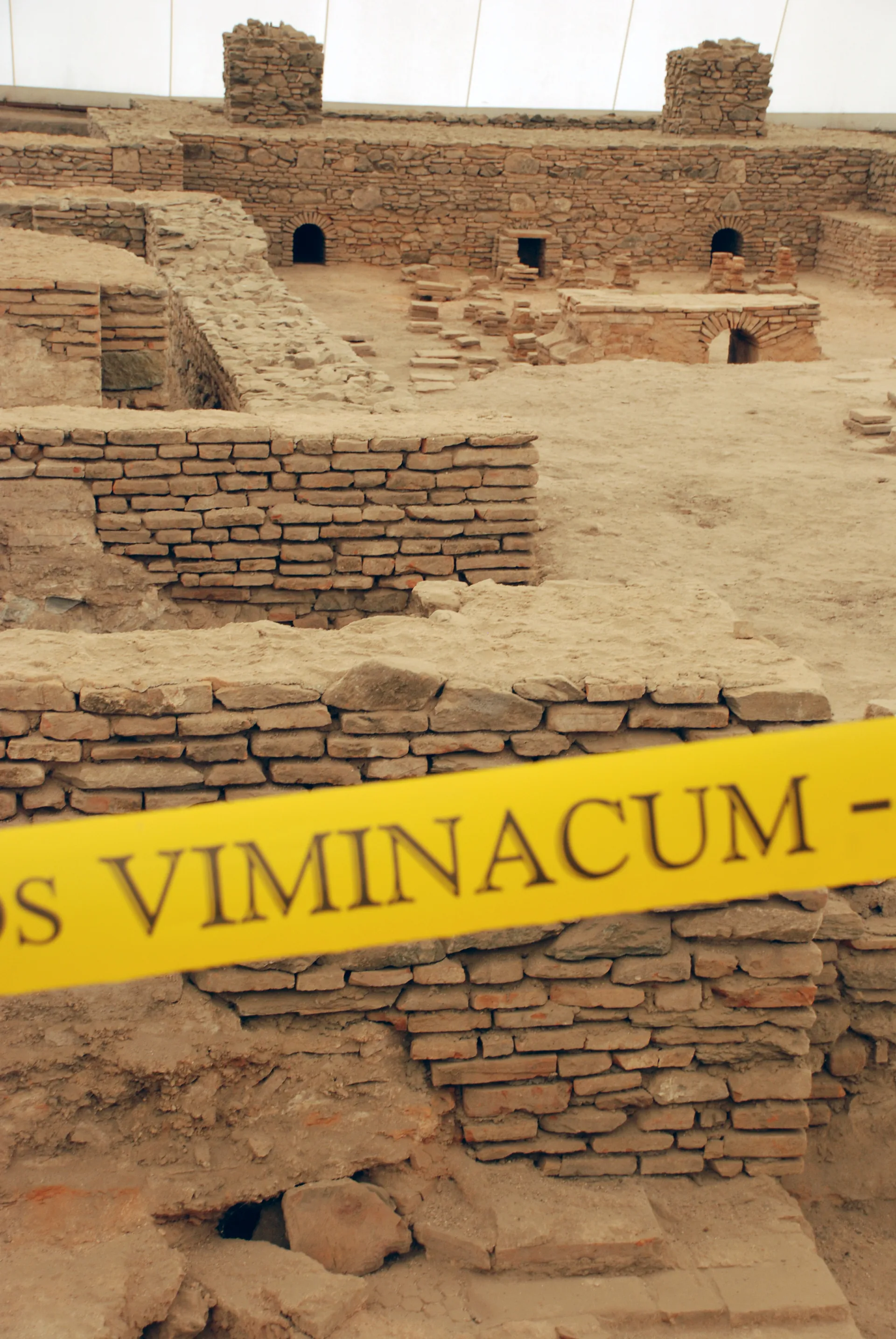
Excavations have uncovered an amphitheatre that seated 12,000, an elaborate thermae with six heated pools, and a military headquarters of 40 rooms across 3,500 square metres. Most striking is the mausoleum, where 4th-century tombs still carry painted frescoes — rare survivals that put a human face on the city's final Roman generations.
A mammoth, a million years older than Rome
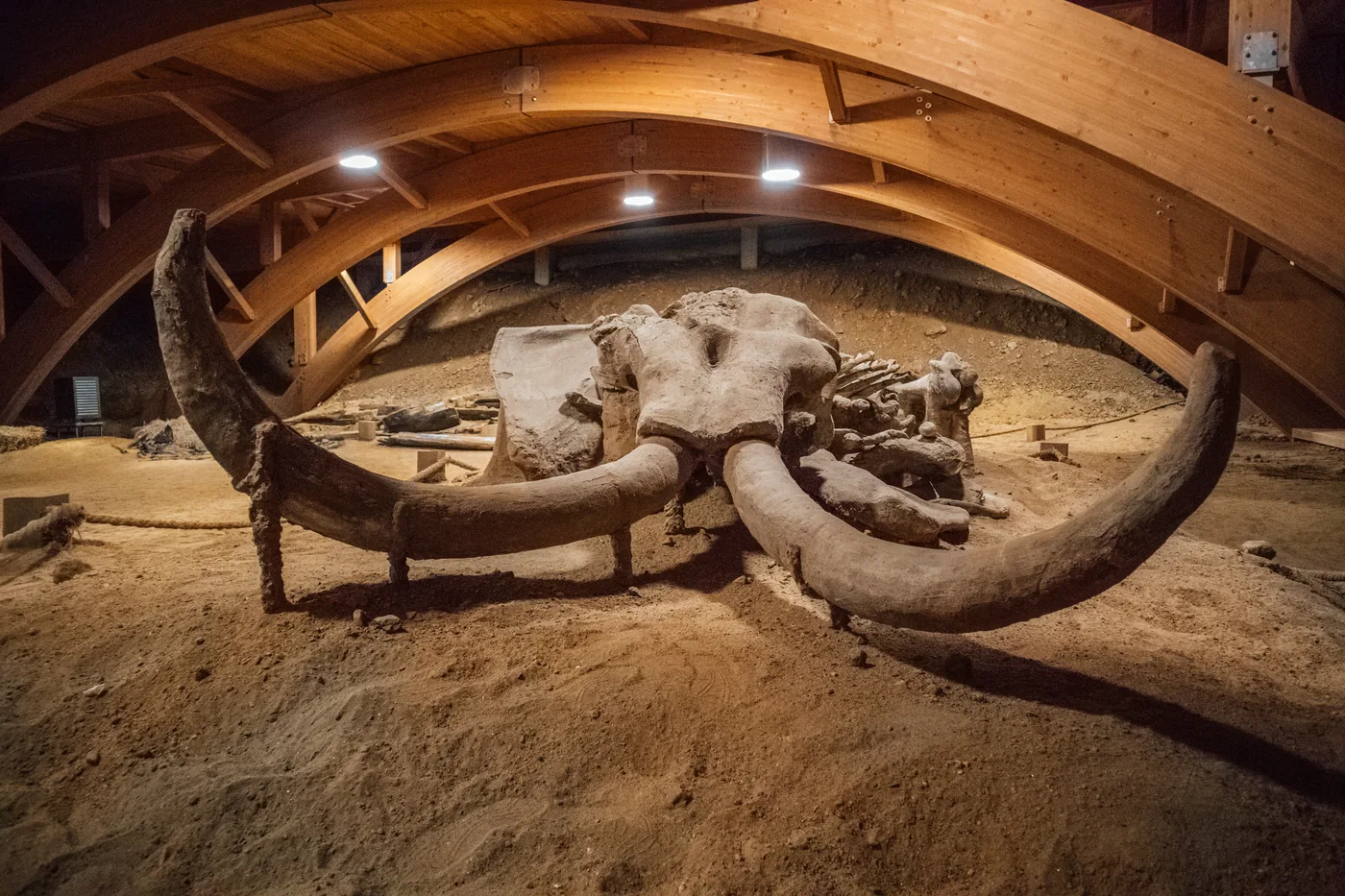
In 2009, excavators working the same ground uncovered "Vika" — a mammoth skeleton over a million years old, more than 4 metres tall and around 10 tonnes, one of only around 20 such complete skeletons ever found. It's a genuinely unusual pairing: a Roman legionary capital and an Ice Age giant, uncovered within the same archaeological park.
What to see at Viminacium
What to see at Viminacium
Viminacium is a walk across a 450-hectare archaeological park — still only a few percent excavated. These are the things to look for as you go.
- Amphitheatre
The 12,000-seat arena
The reconstructed amphitheatre is the park's centrepiece — once large enough to seat the better part of the city's population for games and spectacle. Its scale is the clearest measure of how significant Viminacium really was.
- Thermae
The imperial baths
The excavated thermae held six pools and a full hypocaust heating system — a reminder that this was a proper Roman city with all the comforts of empire, not a frontier outpost.
- Mausoleum
The frescoed tombs
A cluster of 4th-century tombs beneath a modern shelter preserves painted frescoes, including the well-known "Divina" figure — rare, fragile survivals from Viminacium's last Roman century.
- Principium
The legion's headquarters
A 3,500-square-metre complex of some 40 rooms formed the administrative heart of the legionary camp — the nerve centre from which Rome governed this stretch of the Danube frontier.
- Vika the mammoth
An Ice Age giant
A short walk from the Roman ruins, a shelter protects the skeleton of Vika, a female mammoth over a million years old — more than 4 metres tall, roughly 10 tonnes, and one of the most complete mammoth finds anywhere.
- Via Militaris
The Danube road
Viminacium sat on the Roman road linking the Danube frontier forts — a strategic position that explains its size and its long life as a military and administrative capital.
The day trip from Belgrade
The day trip from Belgrade
Viminacium sits east of Belgrade near Kostolac, so nearly everyone visits on a guided day trip — here's how it works.
An easy day out of Belgrade
Viminacium is roughly 90 minutes to two hours from Belgrade depending on the route, so tours run comfortably as a full day — typically combined with the Danube fortresses at Golubac and Smederevo along the way.
Usually part of a Danube circuit
Most bookable tours pair Viminacium with Golubac Fortress and the dramatic Iron Gate gorge, sometimes with a rakija (fruit brandy) distillery stop — giving you the Roman city and the Danube's medieval and natural highlights in one trip.
What tours include
Day trips generally bundle round-trip transport from Belgrade, a guide, and entrance to the sites visited; some add a speedboat ride through the Iron Gate or a distillery tasting. Check exactly what your chosen option includes when you book.
On site
You'll walk across open, uneven archaeological ground, so wear sturdy shoes and bring sun protection — much of the site has little shade. The mammoth shelter and mausoleum are a short walk from the main Roman ruins.
Viminacium, in pictures
Viminacium, in pictures
The amphitheatre, baths, frescoed tombs and the mammoth Vika, at the Viminacium archaeological park.
Tour options & what's included
Tour options & what's included
| Option | What it includes | Good to know |
|---|---|---|
| Belgrade → Golubac + Viminacium | Round-trip transport, guide, speedboat ride, entrances | The best-rated, most complete Danube day trip |
| Small-group Danube fortresses tour | Fewer travellers, Smederevo + Viminacium + Golubac | A slower-paced take on the same circuit |
| Multi-day Danube/Serbia trip | Viminacium as one stop on a longer route | For travellers with more time |
| Private tour | Your own vehicle, guide and pace | Flexible; check current availability |
Ways to visit Viminacium
Find a Viminacium day trip for your dates
Every option below is bookable through GetYourGuide, with live availability and the final price shown in your own currency before you pay.
Planning your visit
Planning your visit
Book the Danube circuit
The strongest-rated way to see Viminacium bundles it with Golubac Fortress and the Iron Gate gorge — a fuller day, and better value than visiting Viminacium alone.
Wear sturdy shoes
The site is open, uneven archaeological ground with limited shade in places — comfortable walking shoes and sun protection make the day easier.
Don't skip the mammoth
Vika's shelter is easy to overlook next to the Roman ruins, but the skeleton is genuinely remarkable — ask your guide to route past it if it isn't automatically included.
Go with a guide
Only a few percent of Viminacium's 450 hectares has been excavated, and the site rewards context — a guide connects the amphitheatre, baths and mausoleum into one coherent story of the city's rise and fall.
Booking flexibility
Listings typically offer free cancellation up to 24 hours before, so you can lock in a departure and adjust later if your Belgrade plans change.
Planning a Viminacium day from Belgrade
Planning a Viminacium day from Belgrade
Visiting Viminacium from Belgrade: the day trip, the mammoth, and what to see
The drive, the Danube circuit, why the mammoth is worth it, and how to plan your day at Rome's Danube capital.
Read more → THE LEGION BEHIND THE CITYViminacium and Legio VII Claudia: Rome's Danube Legion
Legio VII Claudia manned this fortress 300+ years as it grew into Rome's capital of Moesia Superior, minted its own coins, then fell to the Huns in AD 441.
Read more → ROME'S RAREST FUNERARY ARTThe Painted Tombs of Viminacium: Frescoes North of Italy
Viminacium's necropolis holds over 14,000 graves and 29 painted Roman tombs — rare frescoes of cupids, a panther, and a Christian monogram, still on view today.
Read more → AN ICE AGE DISCOVERYVika and the Mammoths of Viminacium's Ice Age Past
In 2009 a Serbian coal mine turned up Vika — a near-complete Ice Age mammoth, one of roughly twenty ever found, and Viminacium's most unexpected exhibit by far.
Read more → SEEING THE SITE TODAYInside Viminacium: The Amphitheatre, Baths and Crypts
Domus Scientiarum, guided crypts, an active dig across 450 hectares — what Viminacium's archaeological park actually looks and feels like once you're on it.
Read more → HOW IT COMPARESViminacium vs Serbia's Other Roman Sites: A Comparison
Felix Romuliana, Sirmium, Naissus — Serbia has Roman capitals to spare. Here's how Viminacium compares, and why it's still the easiest one to actually visit.
Read more →GEO/FAQ
Viminacium day-trip questions
What is Viminacium?
Viminacium was a Roman legionary fortress and city on the Danube, in what is now eastern Serbia — capital of the province of Moesia Superior. It began as a military camp, received city status under Hadrian in AD 117, grew to an estimated 40,000 people, and was abandoned by the early 7th century. Its ruins — an amphitheatre, baths, a frescoed mausoleum and a legionary headquarters — cover 450 hectares, of which only a few percent has been excavated.
What is the Viminacium mammoth?
"Vika" is a female mammoth skeleton, over a million years old, unearthed at Viminacium in 2009 during archaeological and mining work. Standing over 4 metres tall and weighing an estimated 10 tonnes, it is one of only around 20 complete mammoth skeletons ever found — displayed in a shelter within the same park as the Roman ruins.
How do I get there from Belgrade?
Viminacium is near Kostolac and Požarevac, roughly 90 minutes to two hours from Belgrade depending on the route. Almost everyone visits on a guided day trip, most often combined with Golubac Fortress and the Iron Gate gorge further along the Danube.
Is it worth the day trip?
If you're interested in Roman history or unusual pairings of ancient sites, yes — Viminacium was one of the largest Roman cities in the Balkans, and having a genuine Ice Age mammoth skeleton on the same site is a rare combination. The strongest-rated tours pair it with the scenic Iron Gate gorge for a fuller day.
What will I see there?
The highlights are the reconstructed 12,000-seat amphitheatre, the excavated imperial baths, the frescoed 4th-century mausoleum, the legionary headquarters complex, and the mammoth skeleton Vika in its own shelter nearby.
Can I combine Viminacium with other sites?
Yes — the most popular bookable tours combine Viminacium with Golubac Fortress and a speedboat ride through the Iron Gate gorge, and some add a rakija distillery stop or Smederevo Fortress. Each option's inclusions and live price are shown in the booking widget.